We build MVPs for a living. So you'd expect us to tell you to build one. Most of the time, we will.
But not always. Sometimes the most honest thing we can say to a founder is: not yet.
That's an odd thing for an MVP team to put in writing, and we know it. It would be easier (and more profitable in the short term) to take every project that walks in the door. We don't, because we've seen what happens when a founder spends their seed money building the wrong thing. The product ships, nobody shows up, and the runway's gone. We'd rather lose a project than be part of that story.
Here's the number that sits behind all of this: roughly 42% of startups fail because there was no real market need for what they built. An MVP doesn't fix that. Building faster doesn't fix that. Only one thing does, finding out whether people actually want the thing before you pour months and a chunk of your runway into it.
So before you build, run through these six signs. If any of them sound like you, you might not be ready. And we'll show you cheaper ways to get there. None of this is anti-building. It's pro-building-the-right-thing.
Sign 1. You Can't Say What You're Testing in One Sentence
An MVP is an experiment, not a product. And an experiment without a hypothesis is just spending.
Try to finish this sentence: "I'm building this to find out whether ___, and I'll know I'm right if ___."
If you can't fill in both blanks cleanly, you're not ready to build. You're ready to think. "I want to see what happens" isn't a hypothesis. "I want to find out if freelancers will pay $20 a month to automate invoice reminders, and I'll know if 30 of them subscribe in the first month" is.
The one-sentence test is unforgiving on purpose. If the thing you're testing won't fit in a sentence, it won't fit in a focused MVP either. And you'll end up building five experiments at once and learning from none of them.
Sign 2. You Haven't Talked to Enough Real Users
This is the most common reason founders aren't ready, and the hardest to admit. Because skipping it feels like progress.
Here's the test: have you sat down with at least 20 people in your target audience and listened, without pitching them? Not "showed them your deck and watched them nod politely." Listened. Asked about the problem. Found out how they solve it today, what they've tried, what they'd pay to make it go away.
If you haven't, building is the most expensive form of procrastination there is. It feels productive. You're shipping code, you're making progress, you're avoiding the genuinely uncomfortable work of finding out whether strangers care about your idea. But code can't tell you something twenty honest conversations would have told you for free.
Talk to the users first. They'll either confirm you're onto something or save you a build.
Sign 3. You Haven't Defined What Success Looks Like
"Let's launch and see what happens" is how founders spend $40,000 and learn nothing.
Before you build, tie your MVP to one or two measurable learning goals. Not revenue goals, learning goals. What number, after launch, would tell you the hypothesis is working? What number would tell you it's time to change course?
For the invoice-reminder example: "100 freelancers sign up in month one, and 30% of them connect a real account." Those numbers mean something. You can look at them in six weeks and make a real decision. "See what happens" gives you a launch and a shrug.
If you don't know what success looks like, you won't recognize it when it arrives, or notice when it doesn't. Define it before you build, while you're still honest with yourself.
Sign 4. You're Trying to Build Everything
If your "minimum viable product" has fifteen features, it's neither minimum nor an experiment. It's a v1 you can't afford yet.
Feature creep before launch is a tell that you haven't decided what you're actually testing. Every feature is a hedge, "but what if they want this too?". And a pile of hedges is just an expensive way of admitting you're not sure. An MVP tests one risky assumption. One. Everything else can wait for the version you build after you've proven the assumption holds.
The good news: if you genuinely are ready and the problem is just that your scope is too big, that's fixable. Here's how to scope a software project down to its essential first build before you spend a dollar. Cutting the scope is often the difference between "not ready" and "ready."
Sign 5, A Cheaper Test Would Answer Your Question
This is the big one, and the most useful. Before you commit to a build, ask: is there a cheaper experiment that would answer the same question?
Very often there is. Building software is one of the most expensive ways to test an idea, and it's rarely the first thing you should reach for. Here are four alternatives, roughly in order of cost, with honest math:
- Customer interviews, free, highest signal. Twenty real conversations cost you nothing but time and the discomfort of asking. They'll tell you more about whether your idea has legs than the first month of a build ever could.
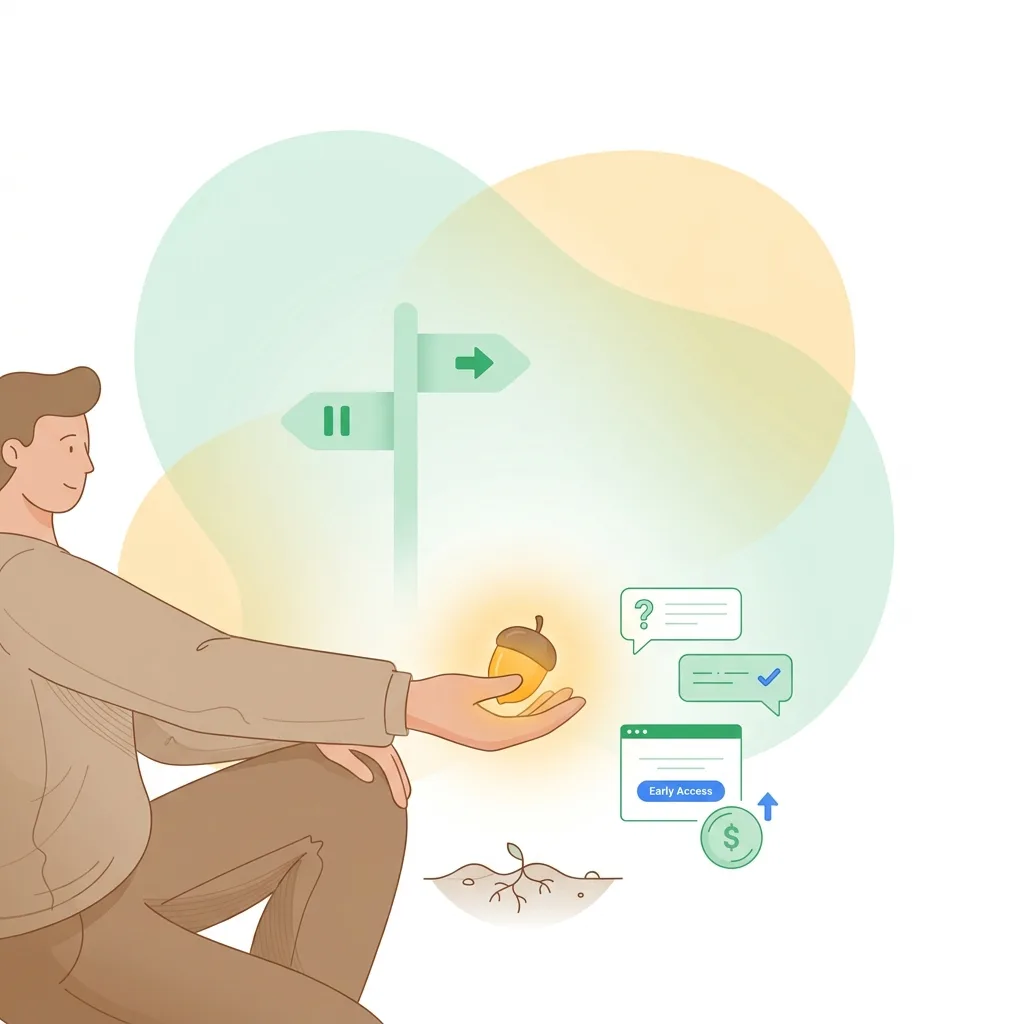
- A landing page plus a little ad spend, $200 to $500. Put up a one-page site describing the product, add a "sign up for early access" button, and send some targeted ads at it. Real strangers either click and sign up or they don't. That's a demand signal, bought for a few hundred dollars.
- A concierge or manual MVP. Your own labor. Deliver the value by hand before you automate any of it. Airbnb's founders started by literally renting out air mattresses in their own apartment. No platform, no app, just the bare service. If you can't deliver the value manually to ten people, software won't save you. If you can, you've learned exactly what to build.
- Pre-sales or deposits, the strongest signal there is. Ask people to pay before the product exists. A deposit, a pre-order, a paid pilot. Nothing separates "I love this idea" from "I'll actually pay for this" like asking for money. It's the highest-confidence validation you can get.
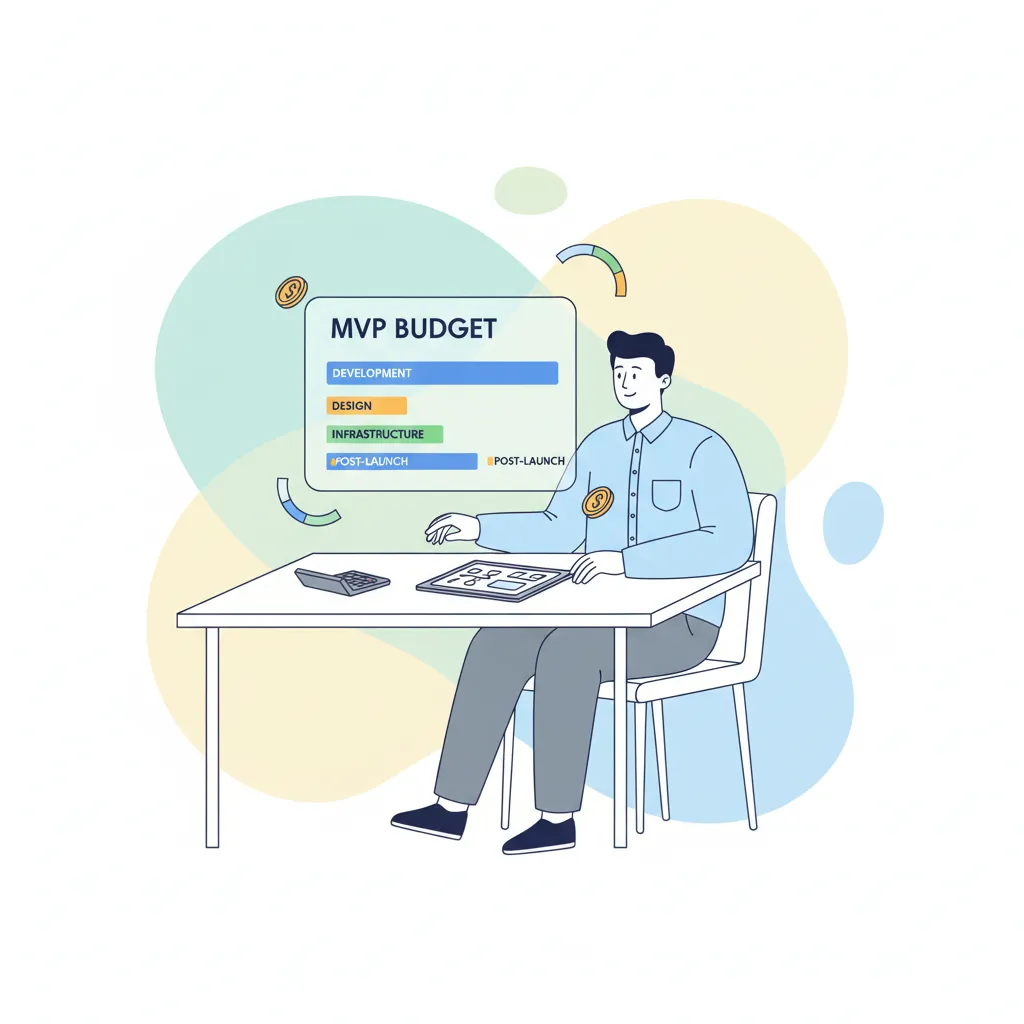
Now the comparison that matters. A typical MVP runs $15,000 to $50,000 and takes two to four months to build, here's the full cost breakdown. Two to four weeks and roughly $1,000 to $2,000 of validation can tell you whether that build is worth starting. The validation isn't a delay. It's insurance on the most expensive bet you're about to make.
If a $300 landing page would answer your question, run the landing page first. The MVP will still be there next month. And you'll build a much better one for having waited.
Sign 6. You're Building to Raise, Not to Learn
Some founders don't really want an MVP. They want a demo to wave at investors. The build becomes a prop.
We understand the pressure. But a polished demo with no validation underneath it is a fragile foundation, and good investors can feel the hollowness. What they actually want isn't polish. It's evidence of demand. Twenty users who signed up. Ten who paid a deposit. A waitlist that grew without you begging. Those are worth more in a pitch than the slickest demo of a product nobody's asked for.
Build to learn, and the fundraising story writes itself. Build to raise, and you've built a beautiful answer to a question no investor was really asking.
When You ARE Ready (And What Comes Next)
We've spent six sections on the brakes. Here's the green light. Because most founders reading this are closer than they fear.
You're ready to build an MVP when you can check these:
- You can state your hypothesis in one sentence.
- You've had at least 20 real conversations with your target users.
- You've defined one or two measurable signs of success.
- You've cut the scope to the one assumption that matters most.
- You have evidence that someone has a problem worth paying to solve.
If that's you, stop reading and go build. But build it right. Start with a tight scope, price it honestly with our MVP cost guide, then follow the eight-week build process that turns a validated idea into a working product. And if money's the constraint rather than readiness, here's how to start building your product on a limited budget, what to build first and where to spend.
This is exactly the path Eitoss took. They came to us ready, a clear problem, a real market need they'd already confirmed. There was nothing to second-guess. So we scoped it tight and shipped their MVP in three months. They raised funding, and we've been building together for more than two years since. Readiness is the whole reason that timeline held. Eitoss is what "you're ready" looks like. And proof that the wait, when it's needed, pays off.
We've sat on the founder's side of this table too. Before we committed our own team to building Formester, our own SaaS product, we pressure-tested the idea first. Because betting your own money on an unvalidated guess is exactly as painful as it sounds. That product is live and growing today, with a 4.7 rating. It got there because we did the validation before the build, not after.
Why We'd Rather Tell You to Wait
Here's the part that probably explains this whole article.
We're not interested in one-off projects. We're interested in partnerships: clients who ship something real, see it work, and keep building with us for years. Eitoss has been with us for over two years. PerformLine grew from one engineer to eight-plus over two years. Those relationships don't start with us taking a check to build the wrong thing.
If we build something the market doesn't want, two things happen: you burn your runway, and we burn your trust. We'd rather tell you to validate first, watch you come back when you're ready, and build something that actually works. That's not generosity. It's just the long game. And it's the only game we play.
So we'll tell you honestly what you need, and what can wait. Not to bill less, but so you don't burn your runway on the wrong thing.
Not Sure If You're Ready?
Talk to us. We'll give you an honest read (build now, validate first, or wait) no commitment. If the answer is "you're ready," we'll help you scope it. If it's "test this cheaper first," we'll tell you exactly how. Either way, you'll leave the conversation knowing more than you came in with.
Book an honest assessment, or read more about how we approach MVP development.
Related reading: How to Scope a Software Project Before You Spend a Dollar | How Much Does MVP Development Cost in 2026? | Why We Built Formester
Get practical engineering insights
Real lessons from building products - ours and our clients'. No spam. Monthly.
Have a project in mind?
We'd love to hear what you're building. Let's talk about how we can help.
Let's Talk