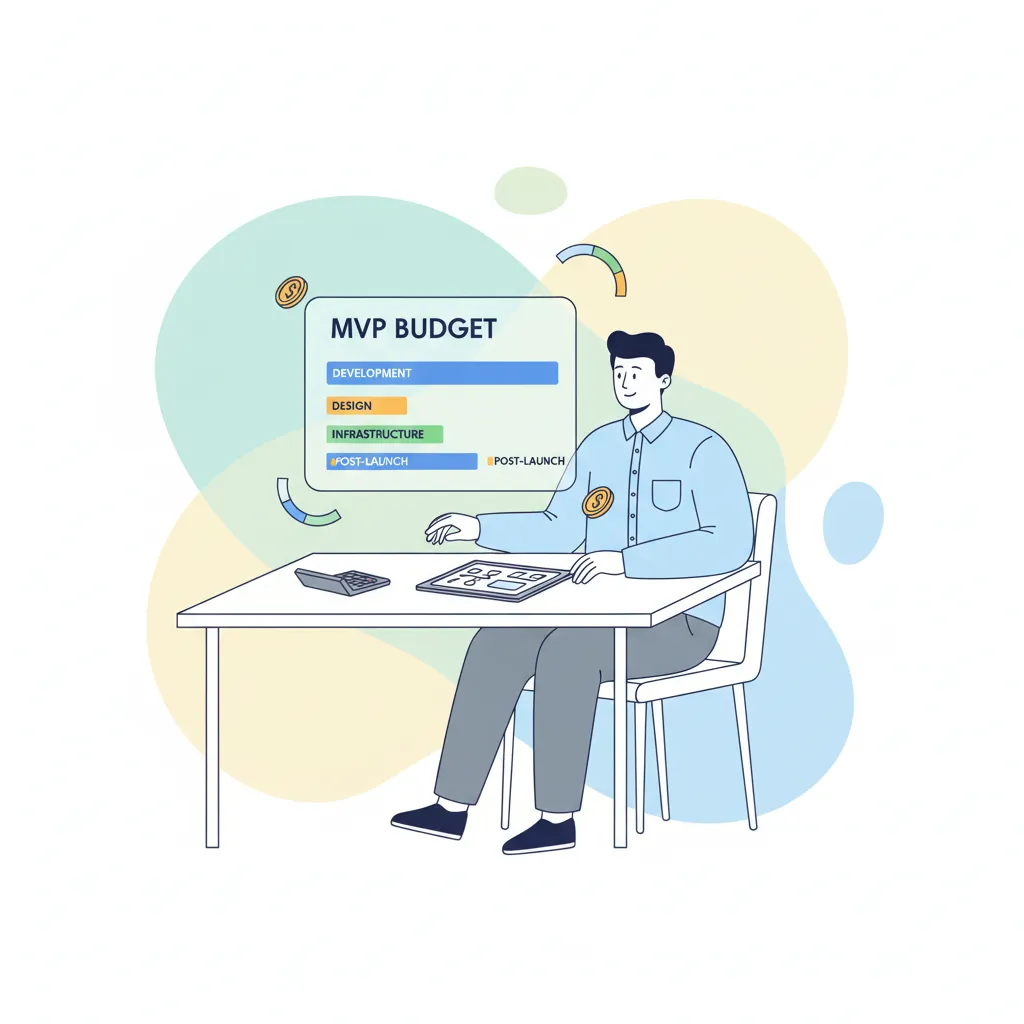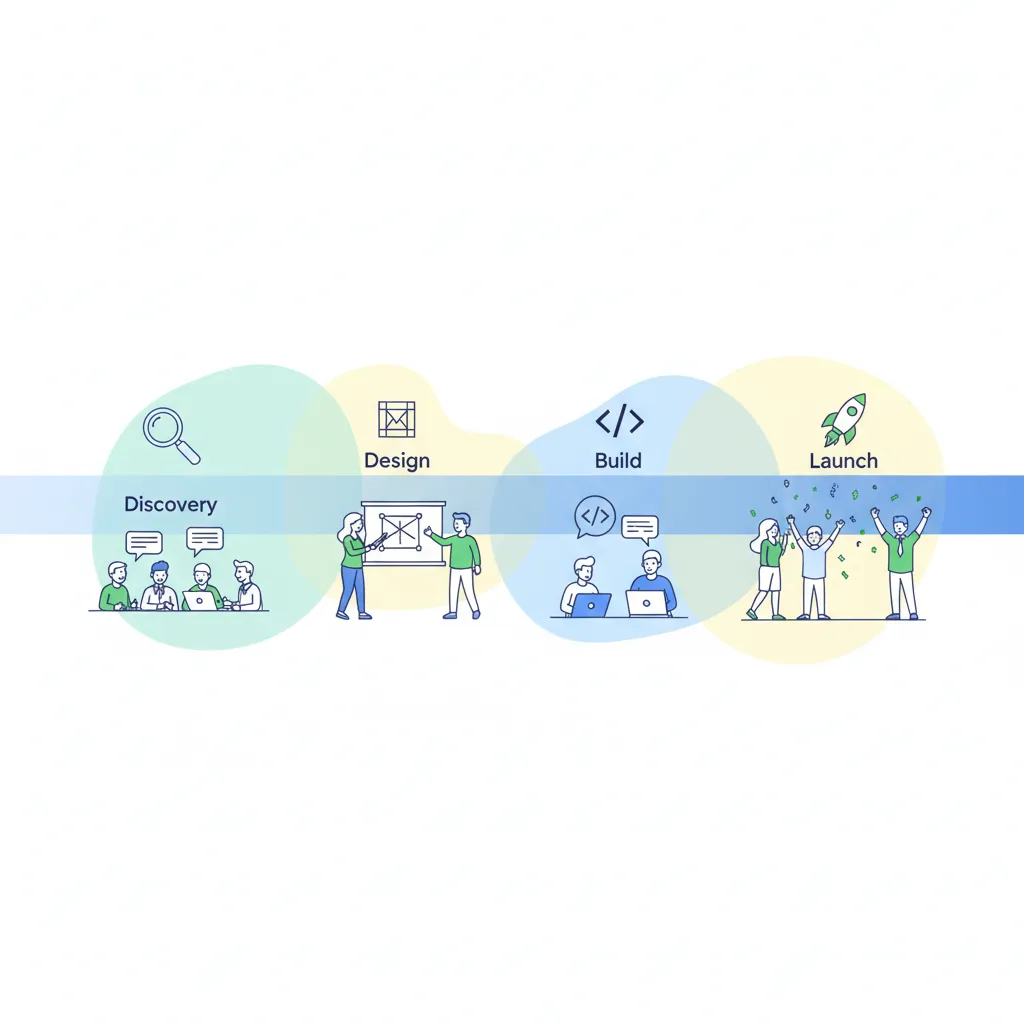
A tight budget isn't a disadvantage. It's a forcing function.
When money is short, you can't afford to build the wrong big thing. So you're pushed to build the right small thing instead. That constraint, painful as it feels, is one of the best things that can happen to an early product. Some of the leanest, sharpest products ever made came from founders who couldn't afford to be wasteful.
We'll be honest about the advice you've probably been getting, too. Most of it falls into two camps: "just raise more money" (unhelpful if you can't) or "hire us to build it" (convenient for whoever's saying it). This is neither. This is the honest playbook for building cheaply and well, when the money is real and limited and yours.
One thing before we start. This post assumes you've already validated the idea. That you have some real signal people want this. If you're not sure yet, don't spend a rupee on building. Start with when NOT to build an MVP, which walks through the cheap ways to test demand first. Come back here when you're ready to actually build. Everything below is the how-to-build-cheaply path, for founders who are past that gate.
Build the smallest thing that proves the value
The single most expensive mistake on a tight budget is building too much.
Every feature is money. Every screen is money. Every "while we're at it, let's also..." is money you may not have. So the discipline that protects your budget more than any other is ruthless scoping: define the one core action your product must do well, and cut everything else to "later."
This isn't corner-cutting. It's the opposite. It's deciding, on purpose, what actually has to exist for your product to prove its value, and refusing to spend on anything that doesn't. (Scoping well is its own skill, and we've written the deep how-to: how to scope a software project. Read it before you spec a single feature.)
To make it concrete, here's what almost always gets cut from a first build:
- Settings and preferences pages. Most users never touch them at first. Hardcode sensible defaults.
- Admin panels and dashboards. You can manage data directly in the database early on. Build the admin UI when managing-by-hand actually hurts.
- Edge-case flows, the rare password-reset variant, the unusual permission combination. Handle the common path; deal with edge cases when a real user hits one.
- "Nice to have" integrations. Every connector you add is build time and maintenance. Add them when a paying user needs one.
If cutting these feels uncomfortable, good. That discomfort is you protecting your runway.
Sequence it: what to build first, second, and not yet
Once you've scoped small, order what's left by what proves the most with the least spend. A budget-conscious build sequence usually looks like this:
- The core value action. The one thing your product does that makes someone go "yes, I want this." Build this first and build it well. Everything else exists to support it.
- The thinnest path to a user actually using it. Just enough sign-up and onboarding to get a real person to the core action. Note: sign-in is a bought service, not a build (more on that below), don't spend your budget here.
- A way to charge or capture interest. Even a simple checkout or a waitlist. You need to learn whether people will pay, or at least commit, and you can't learn that without a way for them to.
- Everything else, later. Genuinely later.
The principle behind the order: spend your first dollars on the part that proves people want it. Not on polish, not on the admin tools, not on the feature you're personally excited about. On the thing that turns "I think people want this" into "people are using this."
No-code and low-code are a legitimate cheap start (not a cop-out)
Here's something worth saying plainly: for many budget-constrained founders, building your first version on no-code or low-code is the smart move, not a compromise.
It's the fastest, cheapest way to get a working product in front of real users. You're paying a small subscription instead of a build, and you can change things yourself without waiting on (or paying) an engineer. If that gets you to real users and real learning sooner, it's the right tool, full stop. We don't look down on no-code, and you shouldn't let anyone make you feel like you should.
The one honest trade-off to keep in mind: if it works, you'll probably outgrow it. That's a good problem. It means people are using your product hard enough to find the limits. And when you get there, you'll know exactly what to do, because we've written it: when your no-code app hits the ceiling covers the signals and how to graduate without losing momentum. But that's a future-you problem. Today, if no-code gets you live cheaply, use it.
(To be clear, that's a different question from this one: here we're talking about starting cheap on no-code. That post is about leaving it once you've outgrown it. Start here; graduate there.)
Buy the boring parts so your budget goes to your product
Here's a fast way to waste a limited budget: spend it rebuilding things that already exist for a few dollars a month.
Authentication. Payments. Email. Hosting. These are solved problems with cheap (often free-tier) services ready to use. Building your own auth system or payment flow on a tight budget is spending your scarcest resource reinventing something a specialist already perfected and gives you for almost nothing.
The rule: every dollar not spent on a solved problem is a dollar spent on the thing that's actually yours. Wire in a ready-made auth service. Use Stripe or a similar processor for payments. Send email through a transactional service's free tier. Host on a platform with a generous starter plan. Then point all the budget you just saved at your core value action, the part no one else can build for you.
This is one tactic from a bigger principle, and if you want the full version (when to build, when to buy, and how to think about it across your whole product) our build vs buy framework is the complete map. For now, just remember: buy the boring parts.
Where a small paid engagement actually saves money
Now the honest commercial part. And we'll keep it soft, because it should be.
You do not need to hire a full team to build on a budget. Plenty of founders do the entire first build themselves, on no-code or with a single freelancer, and that's completely valid. We're not here to tell you that you must hire anyone.
But there are a couple of specific moments where a small paid engagement quietly saves you money rather than costing it:
- A few days of an experienced engineer to set the foundation right. Getting the early structure, data model, and a few key decisions right means you don't pay double later unpicking shortcuts that hardened into problems. On a tight budget, paying once beats paying twice.
- An hour of honest guidance before you commit. A straight conversation about scope and which tech stack you can actually afford to staff (before you've sunk money into the wrong direction) can save weeks of expensive backtracking.
That's how we think about it: we partner big or small. A small task, or even a bit of honest guidance today, is a partnership that can grow. And plenty of ours started exactly that way. If a few days of senior help or a foundation done right is what saves you from paying twice, that's where a focused engagement or a small MVP build earns its keep. But it's optional, and we'll always tell you when you don't need us.
Protect the runway you have, the mistakes that quietly burn budget
Building cheaply is as much about what you don't spend on. Here are the budget leaks that catch founders most often:
- Scope creep mid-build. The "while we're here, let's also add..." that turns a four-week build into a four-month one. Every addition needs to fight its way past "does this prove the core value?"
- Building for scale you don't have yet. Architecting for a million users when you have zero is paying today for a problem you'd be lucky to have. Build for the users you have; scale when you've earned it.
- Hiring full-time too early. A full-time salary is the biggest fixed cost there is. Before you commit to it, be sure the work is permanent and full-time, not a burst you could handle another way.
- Choosing a stack you can't find cheap help for. An exotic stack means expensive, hard-to-find engineers. Pick something with a deep, affordable talent pool. Your stack choice is also a hiring-cost choice.
- Skipping the validation gate. The most expensive leak of all: building something nobody wanted. If you haven't validated, go back to when NOT to build an MVP first.
Each of these is real money leaking out of a budget that doesn't have any to spare. Name them, watch for them, plug them.
A realistic first-build budget mindset
We won't hand you a price list, anyone who quotes a firm number for "building an app" without knowing what you're building is guessing, and we won't. (If you want honest cost ranges grounded in real projects, here's what an MVP actually costs.)
What we'll give you instead is the mindset, which matters more than any figure:
- Spend the minimum to learn the maximum. Every dollar should buy you a piece of real information about whether this works.
- Keep enough runway to act on what you learn. Don't spend it all on the build. The learning is worthless if you can't afford to respond to it.
- Treat the first build as a step, not the finish line. It's there to prove the value and earn you the right (and the resources) to build the next, better thing.
A limited budget, spent this way, isn't a handicap. It's the discipline that keeps you building the right small thing until you've earned the bigger one.
The takeaway
Tight budget, decided to build? Scope ruthlessly to the one thing that proves your value. Sequence the build so your first dollars go to that core action. Lean on no-code if it gets you live cheaply, buy the boring parts instead of building them, and bring in a little senior help only where it stops you paying twice. Watch the leaks (scope creep, premature scale, early full-time hires) that quietly drain a budget that can't spare it.
Build the right small thing. The bigger things come after you've earned them.
Building on a tight budget and want a straight read on where to spend it. And where not to? Let's talk. Even a short conversation can save you from the expensive mistakes. No pitch, big or small. Get in touch.
Get practical engineering insights
Real lessons from building products - ours and our clients'. No spam. Monthly.
Have a project in mind?
We'd love to hear what you're building. Let's talk about how we can help.
Let's Talk