Let's start with the truth: hiring developers for your startup is terrifying.
You're about to hand a big part of your budget — and your product vision — to people whose work you might not fully understand. And if it goes wrong, you don't just lose money. You lose time. Momentum. Maybe the trust of your investors.
Research from the Harvard Business Review puts the cost of a bad hire at 30% of first-year earnings. For startups, the math is worse. A bad hire doesn't just cost salary — it costs runway. And for many founders, it costs confidence.
This guide won't promise to make hiring easy. But it will give you a framework to hire smarter — from a team that's been on the receiving end of this decision 25+ times.
The 4 Hiring Models (and When Each Makes Sense)
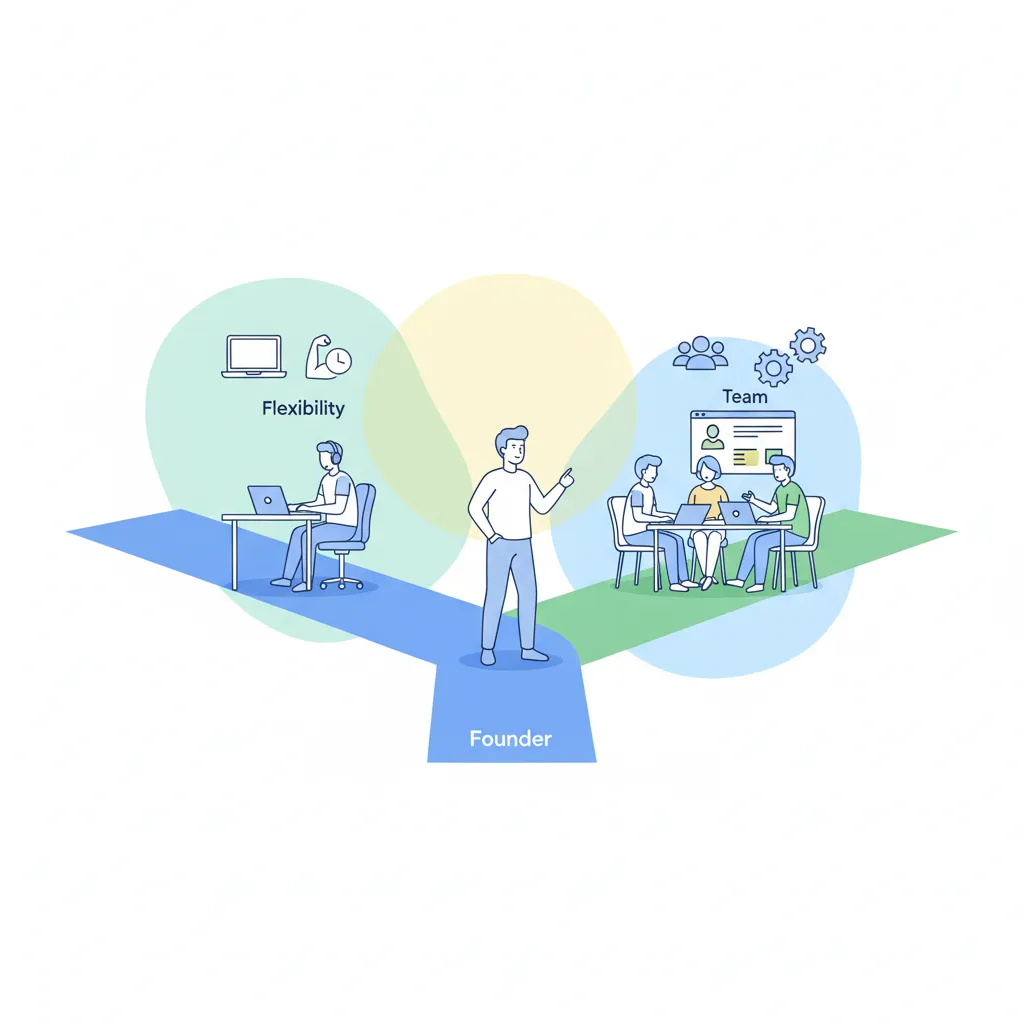
There's no single "right" way to hire developers. There are four models, each with real tradeoffs. The best one depends on your stage, your technical capability, and your budget.
In-House Hire
How it works: You recruit a full-time developer who joins your company.
Pros:
- Full control over their time and priorities
- Deep cultural alignment and long-term commitment
- They build institutional knowledge over years
Cons:
- Slow — recruiting takes 3-6 months for a good engineer
- Expensive — salary, equity, benefits, equipment, management overhead
- Risky if it's your first technical hire — how do you evaluate someone if you're not technical?
Best for: Post-product-market-fit, when you have revenue and can afford to build a team. Or when you've found a technical co-founder.
Freelancers
How it works: You hire an individual developer for specific tasks, usually through platforms like Upwork, Toptal, or personal networks.
Pros:
- Fast to start — can begin within days
- Flexible — pay for what you need, stop when you don't
- Cost-effective for well-defined, smaller tasks
Cons:
- Availability risk — they have other clients. Your project might not be their priority.
- No continuity — if they move on, the knowledge goes with them
- Hard to manage without technical oversight — who reviews their code?
- Variable quality — the range on freelance platforms is enormous
Best for: Specific, well-scoped tasks with clear requirements. Bug fixes. Landing pages. A feature with a clear start and end.
Development Agency / Outsourcing
How it works: You hire a team that manages the entire build — architecture, development, deployment, QA.
Pros:
- Managed team with established process
- Can handle ambiguity — they help define scope, not just execute it
- Built-in project management and QA
- Can ship a complete product without you managing engineers
Cons:
- Variable quality across agencies — some are exceptional, some are not
- Potential for vendor lock-in (always check code ownership terms)
- Less daily control than in-house or augmentation
Best for: MVP development when you need a full team without building one. When you don't have a CTO. When speed matters more than total control.
We shipped Eitoss's MVP in 3 months — from concept to live product with real users. They raised funding on it. The agency model worked because they had a clear vision and needed a team that could execute without hand-holding.
Staff Augmentation
How it works: You bring in engineers who embed in your existing team — same tools, same standups, same codebase.
Pros:
- Your team, your process — they integrate, not replace
- Immediate capacity boost (2-4 week ramp-up)
- Scale up or down without the pain of hiring and firing
- Engineers learn your product deeply
Cons:
- You need management capability — someone has to direct the work
- Not ideal if you have zero technical leadership
- Requires investment in onboarding
Best for: Scaling an existing team. Filling specific skill gaps. Companies with a CTO who needs more hands.
PerformLine started with 1 augmented engineer from our team. Over 2 years, that grew to 8+ — full-stack, DevOps, data, QA, frontend. Same standup every morning. They forget our engineers are external.
For a deeper comparison of the last two models, read our Staff Augmentation vs. Outsourcing guide.
Red Flags: How to Spot a Bad Hire (or Bad Partner) Early
This is the section most guides skip. It's also the most valuable. These red flags apply whether you're hiring a freelancer, an agency, or a full-time developer.
For Freelancers and Individual Developers
Sparse portfolio with no live products. Mockups and screenshots aren't proof of delivery. Ask to see something running in production. If everything in their portfolio is "in development," ask why.
They can't explain past decisions. A good developer doesn't just follow instructions — they make decisions. Ask: "Why did you choose this architecture?" or "What would you do differently?" If the answer is "I was told to build it that way," that's not the seniority level you need.
No questions about your business. If a developer only asks about the tech stack and never asks about your users, your market, or what success looks like — they'll build exactly what you spec, even if it's the wrong thing. You need someone who thinks about the problem, not just the code.
Unwilling to do a paid trial task. A good developer should be confident enough to prove their work on a small, paid assignment. If they insist on a full contract before you've seen any output, that's a mismatch.
For Agencies and Teams
Rotating engineers. You meet the senior architect during the sales process. After signing, you get a team of junior developers you've never spoken to. Ask upfront: will I meet the people who actually build my product? We introduce clients to their engineers before any contract is signed.
No references from similar-stage companies. An agency that's built enterprise software for 10 years might not understand startup constraints. Ask for references from companies at your stage, with your budget, in your market.
Vague pricing with no framework. "It depends" is a fine starting point, but it should be followed by "here's what it depends on and here's how we estimate." If they can't give you a range after a 30-minute conversation, their process isn't mature enough.
Proprietary frameworks or lock-in clauses. If the agency uses their own custom framework, you can't leave without a rewrite. If the contract gives them ownership of the code, you're renting your own product. Check this before signing.
No post-launch plan. An agency that builds your MVP and disappears isn't a partner. Ask: what happens after launch? What does support look like? How do you handle bugs found by users? The answer tells you whether they think of this as a project or a relationship.
The Evaluation Framework (Use This Before You Commit)
Here's a practical checklist you can use before committing to any developer or team:
Step 1: Talk to the builders, not just the sellers. Ask to speak with the engineers who'll actually work on your product. If the company can't or won't arrange that, reconsider.
Step 2: Look for live, working products. Check their portfolio for products that are in production, serving real users. Not designs. Not demos. Working software.
Step 3: Start with a paid trial. Whether it's a freelancer or an agency, a 2-week trial with a specific deliverable is the best signal you'll get. It tests skill, communication, and reliability all at once. We offer 2-week trials for augmentation engagements — because we want the fit to be right for both sides.
Step 4: Evaluate communication during the trial. How fast do they respond? Do they ask clarifying questions? Do they flag problems proactively or wait until you notice? Communication quality during a trial is communication quality during the engagement.
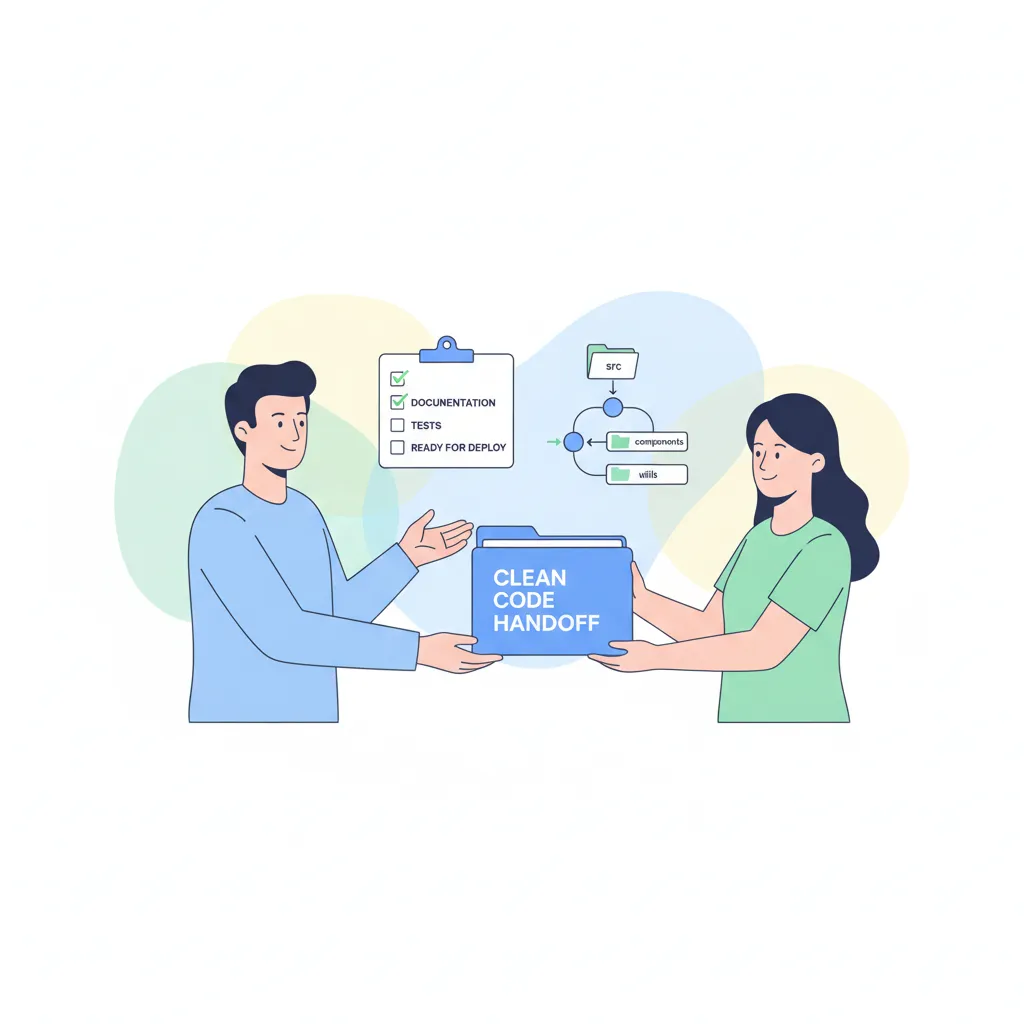
Step 5: Check code quality. If you're not technical, ask a technical friend or advisor to review the code from the trial. Look for: tests, clean structure, documentation, consistent patterns. If the trial code is messy, the production code will be worse.
Step 6: Ask "what happens when things go wrong?" Every project hits problems. The question isn't whether problems happen — it's how the team handles them. Ask for a specific example of a project that went sideways and how they resolved it. Honest answers build trust. Perfect answers are a red flag.
What to Do If You've Already Been Burned
If you're reading this because your last hire or agency didn't work out — you're not alone. It happens more often than anyone in the industry admits.
Before you start over, take a step back:
Diagnose what went wrong. Was it a skill mismatch (they couldn't build what you needed), a communication mismatch (you couldn't get on the same page), a scope mismatch (they built what you asked for, but you asked for the wrong thing), or a values mismatch (they didn't care about the outcome)?
Each failure mode has a different solution. Don't change your entire approach because of a problem that was specific to one dimension.
Assess the codebase. Sometimes the code from a failed engagement is salvageable. Other times, it's faster to start fresh. Get an honest technical review before deciding. We've done codebase assessments for clients recovering from failed engagements — sometimes the foundation is sound, and the next team can build on it.
Adjust your evaluation criteria. Whatever went wrong last time, build a check for it into your next evaluation. If the freelancer ghosted, require a communication schedule. If the agency swapped engineers, get named commitments in writing. If the code was bad, include a code review step in your trial.
You're not starting from zero. You're starting with experience. You know what your product needs. You know what went wrong. You're a better buyer now than you were before.
How We Approach This at AcornGlobus
We've been the team that gets hired. We've sat on the other side of this evaluation over 25 times. Here's what we've learned matters:
Named engineers from day one. You'll meet the people who build your product before you sign anything. Our team is 20+ engineers — small enough that you'll know them by name, experienced enough to deliver.
2-week trial for augmentation. We don't ask you to commit for 6 months based on a sales call. Start with 2 weeks. Evaluate the work, the communication, the fit. Then decide.
Code ownership from day one. Your code. Your repo. Your product. No lock-in, no proprietary frameworks. If you want to bring development in-house later, we'll help you do that.
We'll tell you if we're not the right fit. If your project needs something we can't deliver well, we'd rather say so upfront than take your money and underdeliver. That honesty is why we have 80%+ client retention — the clients who stay, stay because the partnership works.
We stay. PerformLine started with 1 engineer and grew to 8+ over 2 years. Eitoss started as an MVP and became a 2+ year partnership. We don't build and leave. We build and grow with you.
Ready to Start?
If you're looking for developers for your startup — whether that's augmented engineers who join your team or a full team to build your MVP — we'd love to talk.
Not sure which model fits? Let's figure it out together. We'll give you an honest recommendation based on where you are right now.
Related reading: Staff Augmentation vs. Outsourcing: What's Actually Different? | How Much Does MVP Development Cost in 2026? | Why We Built Formester — and What It Taught Us | Should You Hire a Freelancer or Agency for Your Business?
Get practical engineering insights
Real lessons from building products - ours and our clients'. No spam. Monthly.