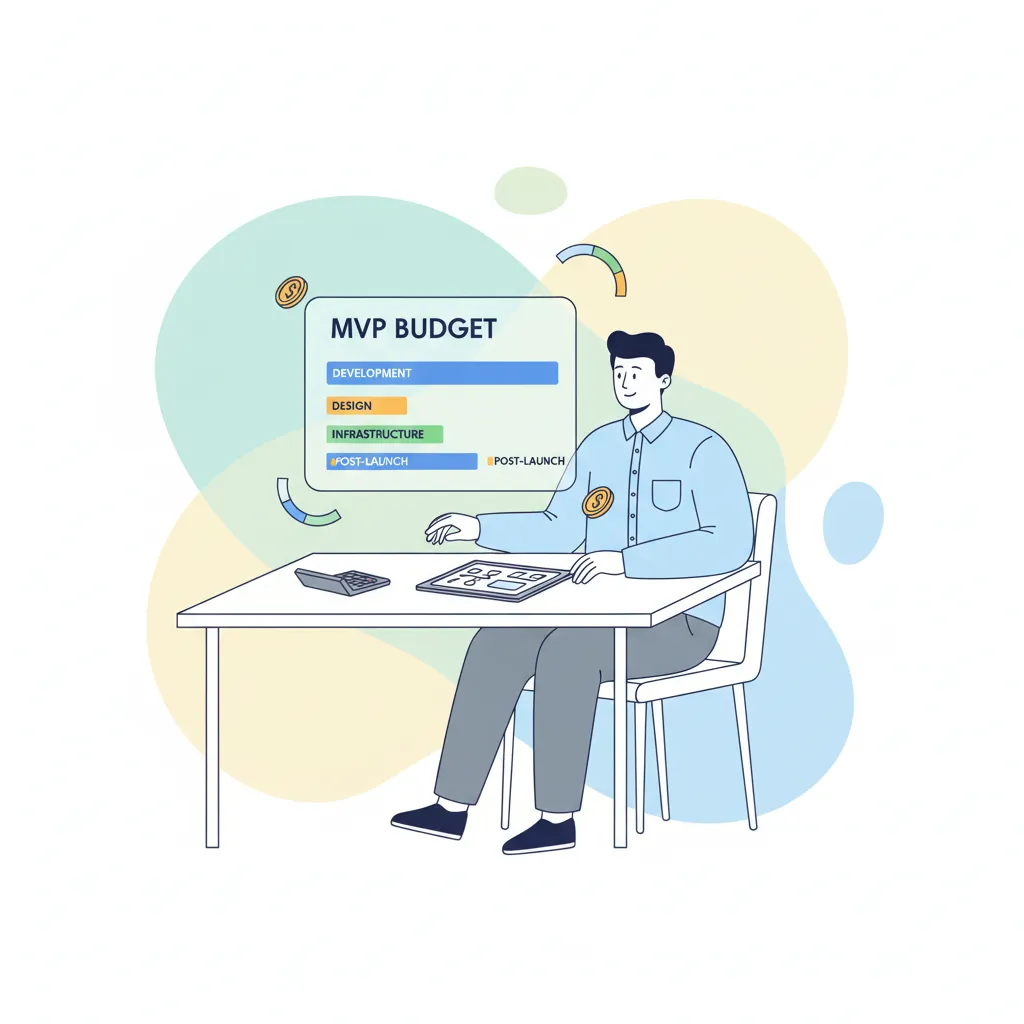
You're trying to figure out how much it costs to build an MVP. You've probably seen answers ranging from $5,000 to $500,000, which isn't helpful. Let's fix that.
Here's the honest answer — from a team that's built MVPs for clients and built our own SaaS product from scratch.
The Short Answer
Here's what MVP development actually costs in 2026, broken down by type:
| MVP Type | Typical Cost Range | Timeline |
|---|---|---|
| Simple web app (1 platform, core features) | $15,000 -- $40,000 | 6--8 weeks |
| SaaS MVP (user accounts, billing, dashboard) | $25,000 -- $75,000 | 8--12 weeks |
| Mobile MVP (iOS or Android) | $25,000 -- $60,000 | 8--12 weeks |
| Cross-platform mobile (iOS + Android) | $35,000 -- $80,000 | 10--14 weeks |
| Complex MVP (AI/ML, real-time, multi-platform) | $60,000 -- $200,000+ | 12--20 weeks |
These ranges are wide because every MVP is different. The next section explains what actually drives your specific cost up or down.
What Actually Drives the Cost
Scope and Feature Complexity
This is the biggest cost driver — by far.
Here's a framework we use with every client: separate your features into "must-have for launch" and "important but can wait."
Must-have for launch (your MVP):
- User authentication and onboarding
- The core workflow that tests your main hypothesis
- Payment integration (if your model requires it)
- Basic admin functions
Important but can wait (your v2):
- Admin dashboard with analytics
- Push notifications
- Advanced user roles and permissions
- Third-party integrations beyond the essentials
- Mobile app (if your web app is the core)
When we built Formester, we started with a list of 30+ features. We launched with eight. Users didn't miss the other 22 — they told us what to build next based on how they actually used the product. That taught us more in two weeks than our feature planning taught us in two months.
We apply the same discipline with clients. When we scoped Eitoss's MVP, we focused on the features that would let them put the product in front of real users and demonstrate traction to investors. Everything else waited.
Team Structure and Location
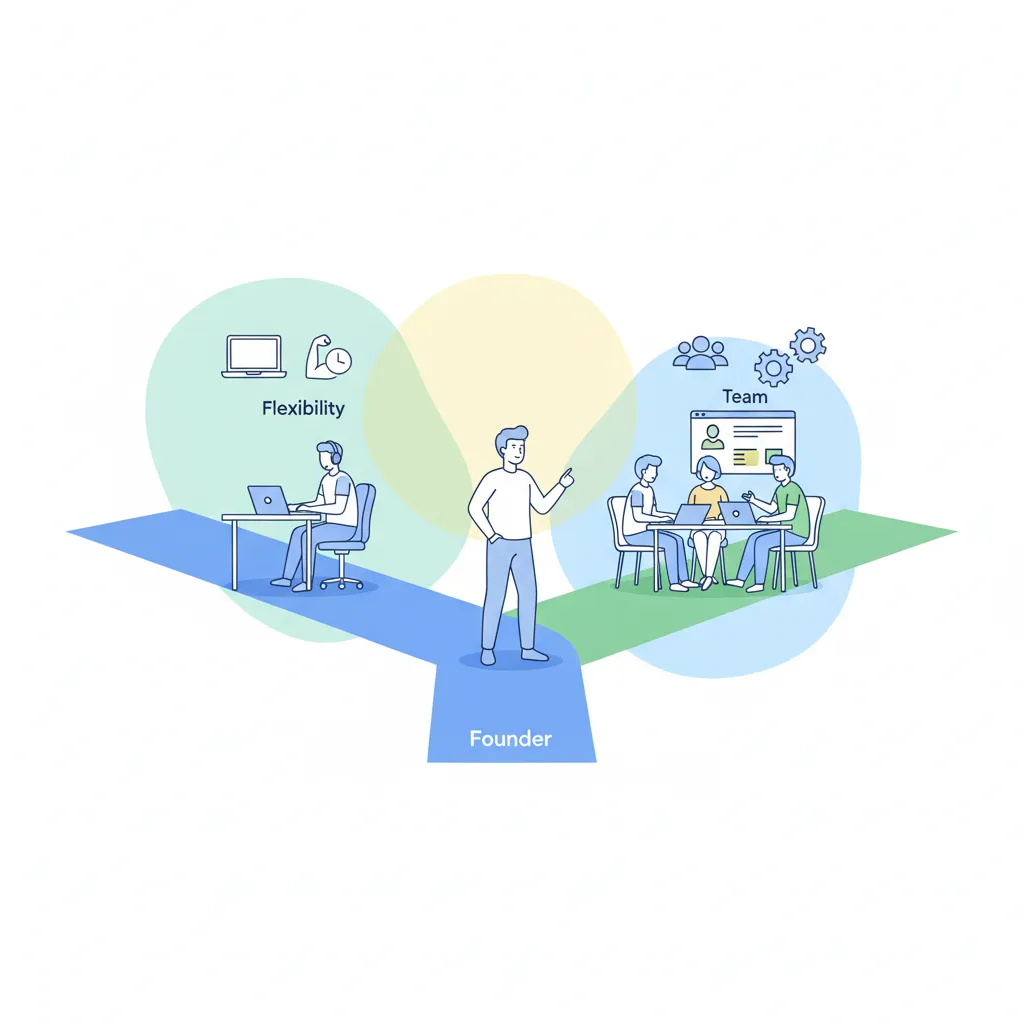
Who builds your MVP significantly affects cost:
| Team Model | Typical Rate (per developer/hr) | Tradeoffs |
|---|---|---|
| In-house (US) | $120 -- $200 | Full control, but slow to hire (3-6 months) and expensive |
| Agency (India) | $20 -- $50 | Managed team, process in place, cost-effective for quality |
| Freelancers | $15 -- $150 | Flexible but variable quality, availability risk |
| Agency (US/Europe) | $100 -- $200 | High quality, but pricing often matches in-house costs |
A note on the agency model: not all agencies are the same. Some assign a rotating pool of developers. Others — like us — assign dedicated engineers who stay on your project from start to finish. You'll know them by name. The difference shows in the product.
Platform Choice
Building for one platform first saves 30-40% compared to building for web and mobile simultaneously. If you're not sure where your users will be, start with web. It's faster to build, easier to iterate, and you can always add mobile once you've validated the product.
Cross-platform frameworks (React Native, Flutter) can reduce the mobile gap, but they add complexity. For an MVP, pick one platform and do it well.
Design Complexity
- Wireframes and functional design: Usually included in agency pricing. Gets the UX right without pixel-perfect polish.
- Pixel-perfect UI design: Adds $5,000 -- $15,000+ depending on screens. Worth it for consumer-facing products. Can wait for most B2B MVPs.
We include wireframes and functional design in our MVP engagements. For pixel-perfect design, we recommend working with a dedicated designer — and we can connect you with good ones.
The Costs Nobody Tells You About
Most MVP cost guides stop at development. That's where the surprises start.
Post-Launch Infrastructure
Your MVP needs somewhere to live. Cloud hosting (AWS, GCP, Azure) typically runs $100 -- $500/month for a new product. Add monitoring tools, error tracking, email services, and you're looking at $200 -- $800/month before you have significant traffic.
This isn't a lot, but founders who don't budget for it get caught off guard.
Scope Creep
The most expensive word in startups is "also."
"Can we also add..." is how a $30,000 MVP becomes a $60,000 one. It happens slowly — a feature here, a "small change" there. Each one seems reasonable in isolation. Together, they double your timeline and budget.
This is why we scope aggressively upfront and push back on additions during the build. Not because we don't want to help — because we've seen what happens when scope isn't disciplined. We've felt it on our own product.
The Cost of Getting It Wrong
Here's the number nobody puts in their guide: rewriting a bad MVP costs 2-3x the original build.
If you hire a cheap freelancer who ships code without tests, no CI/CD, and an architecture that can't scale — you'll be paying to rebuild it within 6-12 months. We've taken over codebases from failed first attempts. The rewrite is always more expensive than doing it right would have been.
Build production-quality from day one. Your MVP might become your product. It did for every successful startup.
Compliance and Security
If your product handles health data (HIPAA), financial data, or European users (GDPR), compliance adds $5,000 -- $20,000 to your MVP cost. This includes secure data handling, audit logging, encryption standards, and potentially third-party compliance review.
Don't skip this. The fines are worse than the upfront cost.
How Your MVP Budget Connects to Fundraising
This is the section most MVP guides skip — and it might be the most important one if you're raising capital.
The math matters. If you're raising a $500K seed round and spending $200K on your MVP, you've used 40% of your runway before you've acquired a single user. That leaves you 6-8 months to find product-market fit, which is tight.
A better rule of thumb: Your MVP should cost 15-30% of your total runway. That leaves room for iteration, marketing, hiring, and the unexpected.
What investors actually want to see:
- A working product with real users (even a handful)
- Evidence that you can build and ship efficiently
- A team that can iterate based on feedback
- Enough runway to reach the next milestone
Investors don't want a polished, feature-complete product. They want proof that your team can execute and that your hypothesis has legs. A focused MVP that costs $30,000 and has 50 active users is more compelling than a $150,000 product that nobody's using.
When we shipped Eitoss's MVP, we focused on what they needed to demonstrate traction to investors. Demoable product in 8 weeks. Live with real users in 3 months. They raised funding. The MVP didn't need to do everything — it needed to prove the concept.
How to Spend Less Without Building Less
Prioritize Ruthlessly
Build the one thing that tests your riskiest assumption. If your startup's hypothesis is "small businesses will pay for automated invoice reminders," your MVP is the reminder system — not the full invoicing platform.
Start With One Platform
Web first, mobile later. Or vice versa — but pick one. You can always expand after validation.
Use What Already Exists
Don't build what you can buy or integrate:
- Authentication: Auth0, Clerk, Firebase Auth
- Payments: Stripe, Razorpay
- Email: SendGrid, Postmark
- Cloud: AWS, GCP (both have startup credits programs)
- Analytics: Mixpanel, PostHog (open-source)
Every integration you use instead of building saves 1-3 weeks of development time.
Choose a Fixed-Price or Capped Engagement
Know your ceiling before you start building. Fixed-price engagements mean you agree on scope and cost upfront. Capped time-and-materials means you get flexibility on features but a hard budget limit.
We offer both. The right model depends on how well-defined your scope is when we start.
What to Look for in an MVP Development Partner
Before you commit to anyone — agency, freelancer, or in-house hire — ask these questions:
Do they build their own products? A team that's built and maintained their own product understands the founder experience in a way that pure service companies don't. We built Formester. It taught us what ownership really means.
Do they guide scope or just take orders? If your development partner says yes to everything, they're not protecting your budget or your timeline. You want a team that tells you what you need — and what can wait.
Who owns the code? You should own 100% of your code from day one. No proprietary frameworks. No lock-in. If you want to bring development in-house later, your code should be ready for that.
What happens after launch? An MVP that ships and then gets abandoned is a waste of money. Ask what post-launch support looks like. Ask if they've stayed with clients beyond the initial build. We have — Eitoss started as an MVP engagement, and we've been building together for over 2 years.
What Happens After the MVP Ships?
Your MVP is the beginning, not the end. Here's what to budget for after launch:
Monthly maintenance: $1,000 -- $5,000/month, depending on complexity. This covers bug fixes, security patches, minor improvements, and infrastructure management.
Iteration based on user feedback: This is where the real product gets built. Budget for 2-3 months of iteration after launch. The features users ask for will surprise you — and they'll be different from what you planned.
Scaling: Once you find product-market fit, you'll need to scale the team, the infrastructure, or both. This is where the engagement model often shifts from project-based to resource augmentation.
Eitoss followed this exact path. MVP in 3 months. Raised funding. Kept building. We're still their engineering team 2+ years later. That continuity — having a team that knows the codebase, the users, and the product vision — saves months of ramp-up time.
Ready to Scope Your MVP?
If you're planning an MVP and want honest guidance on what to build, what to skip, and what it'll cost — let's talk. We'll give you a realistic timeline and budget, not a sales pitch.
You can also explore our MVP development service or read about how we shipped Eitoss from concept to funding.
Related reading: How to Hire Developers for Your Startup Without Getting Burned | Staff Augmentation vs. Outsourcing: What's Actually Different? | Should You Hire a Freelancer or Agency for Your Business?
Get practical engineering insights
Real lessons from building products - ours and our clients'. No spam. Monthly.
Have a project in mind?
We'd love to hear what you're building. Let's talk about how we can help.
Let's Talk