You've heard it before. "An MVP takes 4 to 12 weeks." That range is so wide it's practically useless.
When you're a founder with runway to manage and investors to update, you need more than a range. You need to know what actually happens each week. What decisions you'll face. What your team is building while you're wondering if this is all going to come together.
We've shipped MVPs for startups that went on to raise funding. We've also built our own product, Formester, from scratch. Here's what the MVP development process actually looks like when you break it down week by week -- including the parts that are uncomfortable.
Why Most MVP Timeline Guides Don't Help
Most guides about the MVP development process describe phases in the abstract. "Discovery phase. Design phase. Development phase." That's not a timeline. That's a table of contents.
What founders actually want to know:
- When will I see something working?
- What decisions do I need to make, and when?
- What happens when we realize the scope is bigger than we thought?
- What do I get at the end, and what happens next?
Here's our honest answer to all of those questions.
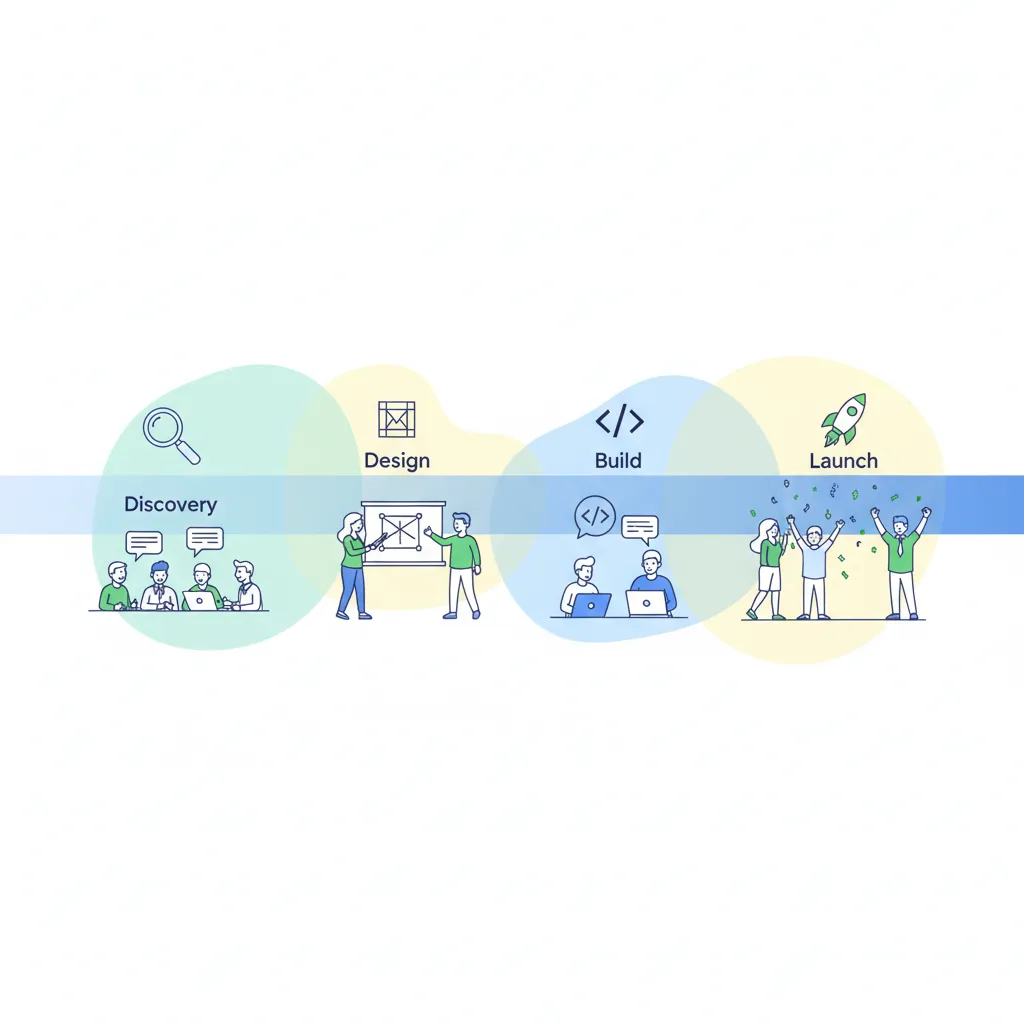
Our 8-Week MVP Development Process
This is the process we've refined over years of building MVPs -- for clients and for ourselves. It's not theoretical. It's what we actually do.
A caveat before we start: 8 weeks assumes proper scoping. The biggest reason MVPs take longer than expected isn't slow development -- it's unclear scope. When you try to build everything, you end up shipping nothing. Scoping is where most projects either succeed or fail.
Weeks 1-2: Discovery and Scoping
This is where we sit down together and figure out what we're actually building. Not the grand vision (that's important, but it comes later). The MVP. The smallest version of your product that proves the idea works.
What happens:
- We learn your business. Who are your users? What problem are you solving? Why does this matter?
- We map out every feature you want, then cut it in half. Then cut it again.
- We prioritize ruthlessly: must-have vs. nice-to-have vs. future-version.
- We define the technical architecture -- what stack makes sense for your product and your budget.
What you get:
- A product brief with defined MVP scope
- Technical architecture document
- A realistic timeline with milestones
- A cost estimate tied to actual scope
What this feels like as a founder: This is the hardest part for most founders. You've been thinking about your product for months, maybe years. Every feature feels essential. But an MVP that tries to do everything does nothing well.
We'll push back on features. Not because we don't want to build them -- but because we want your MVP to actually ship in 8 weeks, not 8 months. We'll tell you honestly what you need now and what can wait. The features you cut aren't gone. They're in the roadmap for after launch.
Week 3: Design and Architecture
With the scope locked, we design the experience and the system behind it.
What happens:
- Wireframes and UI design for core user flows
- Database design and API architecture
- Stack selection (we're stack-agnostic -- we pick what's right for your product, not what we're comfortable with)
- Development environment setup, CI/CD pipeline configuration
What you get:
- Clickable prototype you can share with early users or investors
- Architecture diagram showing how the system fits together
- A development environment ready for sprint 1
Why this week matters: Decisions made in week 3 affect every week that follows. The stack choice, the database design, the API structure -- these are the foundation. We've seen projects where quick architectural decisions early on cost teams months of rework later.
When we built Formester, the architecture decisions we made in the first weeks are still supporting the product today. That's the standard we hold ourselves to.
Weeks 4-5: Sprint 1 (Core Features)
This is where code starts flowing. We build the foundation -- the core user flows that make your product a product.
What happens:
- We build the primary user journey end-to-end
- Core features take shape: authentication, data models, primary workflows
- We deploy to a staging environment so you can see progress in real time
- We demo at the end of week 5
What you get:
- A working build you can click through (not a mockup -- real, functioning software)
- Your first demo: see the product running, test the core flow
What this feels like as a founder: Here's the honest part. Weeks 4-5 are when many founders hit a moment of doubt. The product works, but it doesn't look like the vision yet. The UI might feel rough. The flow might feel incomplete. That's normal.
An MVP at this stage is like a house with the framing up and the plumbing in. It doesn't look like a home yet. But the structure is sound, and everything else builds on top of it. If the demo at week 5 makes you nervous, that's okay. We'll walk through what's coming in the next sprint.
Weeks 6-7: Sprint 2 (Feature Completion)
The second sprint is where the product starts feeling real.
What happens:
- Remaining features get built: secondary flows, integrations, edge cases
- We connect third-party services (payment processing, email, analytics)
- Internal testing begins -- our QA process catches bugs before you see them
- UI polish and responsive design
What you get:
- Feature-complete build with all MVP scope implemented
- Internal QA results with bug fixes underway
- A product that looks and feels like what you imagined
Key decision point: Something always comes up during development that wasn't in the original plan. A feature turns out to be more complex than expected. You discover a user need you hadn't anticipated.
We'll help you make the call: cut scope to hit 8 weeks, or extend the timeline to include it? There's no wrong answer, but there's always a trade-off. We'll give you the honest assessment so you can decide based on your priorities -- launch date, feature set, or budget.
Week 8: Testing, Polish, and Launch
The final push. Everything comes together.
What happens:
- Final QA pass across devices and browsers
- Bug fixes and performance optimization
- Production deployment setup (cloud infrastructure, monitoring, backups)
- Documentation: deployment process, architecture overview, codebase guide
- Launch
What you get:
- Production-ready MVP deployed and live
- CI/CD pipeline (updates ship with a single command)
- Technical documentation for your codebase
- Post-launch support for the first 2 weeks
What launch day feels like: There's a mix of excitement and anxiety on launch day. That's normal too. The first real users will find things you didn't expect. That's not a failure of the process -- that's the point of an MVP. You're learning what works and what doesn't, with real data instead of assumptions.
What Happens After Week 8
This is where most guides end. And this is where most agencies disappear.
The post-launch period is actually the most important phase of your product's life. You have real users now. They're finding bugs you didn't catch. They're using features in ways you didn't anticipate. They're telling you -- through behavior, not words -- what matters and what doesn't.
This is the moment you need your engineering team the most.
We stay.
We shipped a demoable product for Eitoss in 8 weeks and a production-ready version in 3 months. They used it to raise funding. That was over 2 years ago. We're still building together.
That's not an exception. That's how we work. PerformLine started with 1 engineer from our team. Two years later, we're 8+ engineers deep. They didn't plan for that at the start. The partnership grew because the work was good and the trust was real.
We don't see the MVP launch as the finish line. We see it as the starting line. The first version of your product is never the best version. What matters is whether the team that built it is still there to make it better.
How to Set Your MVP Up for Success
Before you start the 8-week clock, here's what makes the difference between an MVP that gains traction and one that collects dust.
Validate before you build. Talk to potential users. Build a waitlist. Test the idea with a landing page. The best MVP development process in the world can't save a product nobody wants. The cost of building an MVP is significant -- make sure you're solving a real problem first.
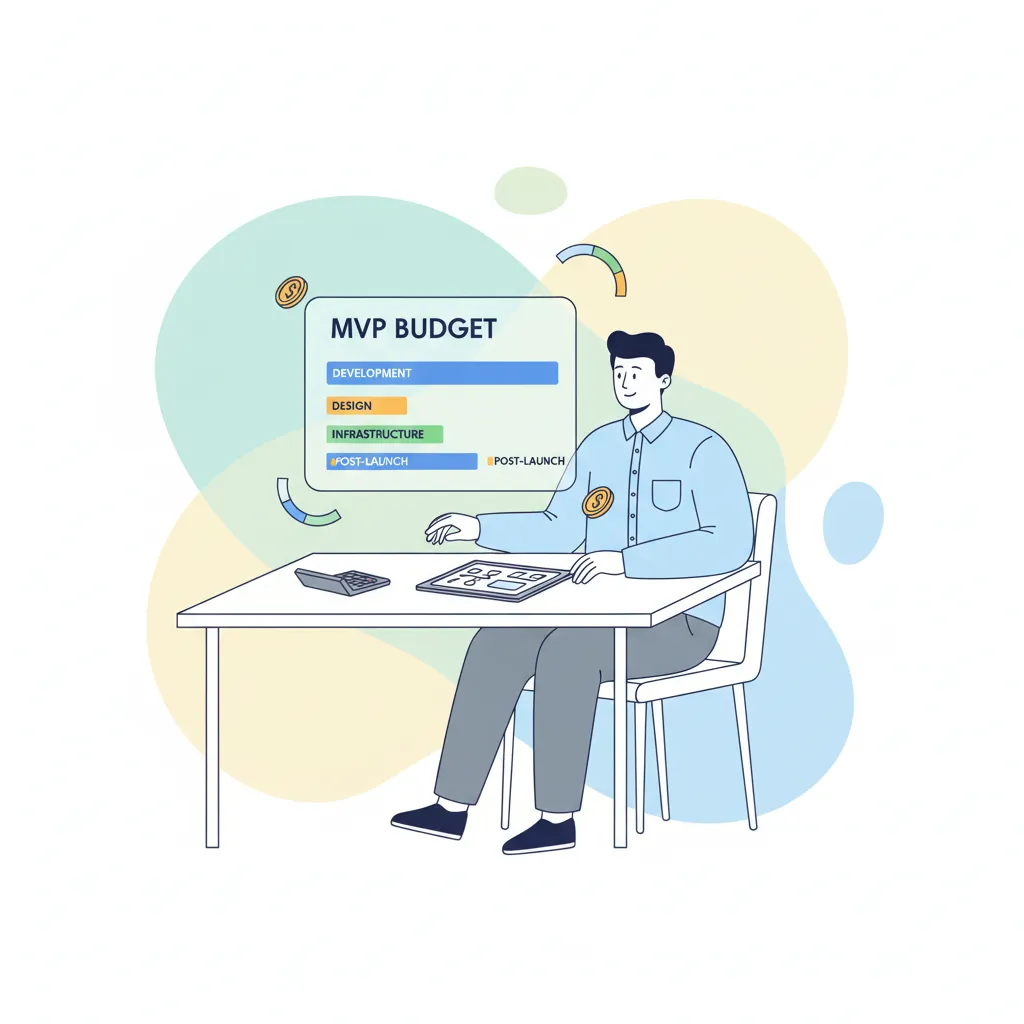
Be honest about your budget and timeline. If you have 12 weeks of runway and need an MVP in 8, that's tight but doable. If you have 6 weeks of runway, we need to have a different conversation. We'll always give you an honest assessment.
Choose a partner who will tell you "no." If every agency you talk to says "yes, we can do that" to every feature and every timeline, be suspicious. A good partner pushes back because they care about the outcome, not just the deal.
Plan for what comes after launch. Your MVP is the beginning, not the end. Budget for iteration. Plan for user feedback loops. Think about your team structure beyond launch day.
What This Process Is Not
Not a throwaway prototype. Everything we build in 8 weeks is production-quality. Clean code, tested, documented, deployed. You're not throwing this away and rebuilding -- you're iterating on a solid foundation.
Not a waterfall project. You see working software every 2 weeks. You give feedback. We adjust. It's a conversation, not a handoff.
Not a transaction. The 8-week process is how we start a partnership. The best client relationships we have started with an MVP. What happened next -- the growth, the scaling, the product evolution -- that's the real story.
Ready to Talk About Your MVP?
If you have a product idea and you're wondering what 8 weeks could look like for you, we're happy to talk it through. We'll give you an honest assessment of scope, timeline, and what it might cost -- no commitment, no pressure.
The first step is always a conversation. And if we're not the right fit, we'll tell you that too.
Get practical engineering insights
Real lessons from building products - ours and our clients'. No spam. Monthly.
Have a project in mind?
We'd love to hear what you're building. Let's talk about how we can help.
Let's Talk